
Vacation in the Dolomites – Where is it most beautiful?
Discover impressive mountains, picturesque lakes, dreamy alpine pastures, and enchanting valleys during your vacation in the Dolomites.
Rugged rock faces, crystal-blue lakes, idyllic mountain meadows, and charming valleys define the landscape of the Dolomites. Added to this is the fascinating play of colors at twilight, which makes the pale limestone of the peaks shimmer in a reddish light.
The Dolomites simply impress everyone with their grace and are a popular destination for a mountain vacation. There are so many dreamlike locations here—well beyond the borders of our beloved High Puster Valley—that it is practically impossible to capture the full beauty of this UNESCO World Heritage site in a single trip.
That is why first-time visitors, in particular, ask us again and again when planning their stay: "Where is the most beautiful place in the Dolomites? What are the absolute must-sees?"
To make your "agony of choice" a little easier, we have created a list of the most beautiful places in the Dolomites for you.
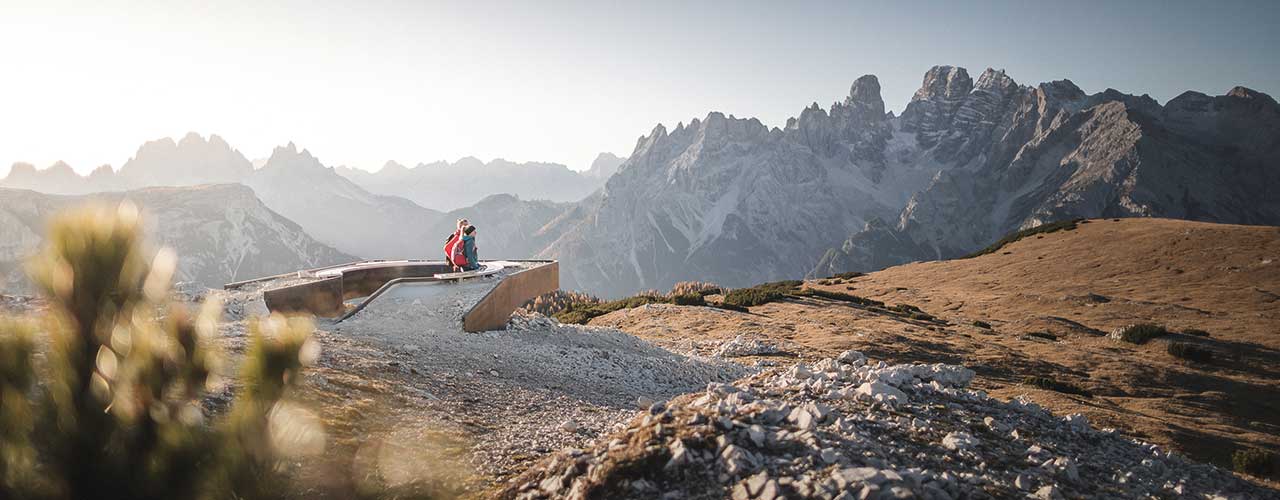
Which are the most beautiful mountains in the Dolomites?
In the Dolomites, one impressive mountain massif follows another. The sheer number of peaks is simply gargantuan and hard to grasp. In 1993, authors Richard Goedeke and Hans Kammerer attempted to count them: focusing only on the 3,000-meter peaks, they arrived at a total of 117 summits. However, the Italian author Alberto Bernardi contradicted this figure in 2014, identifying only 86 peaks that break the 3,000-meter mark.
But regardless of how many summits there truly are, the three most beautiful mountain groups in the Dolomites impress not through their sheer height, but through their uniqueness. We present to you: the Three Peaks (Tre Cime), the Rosengarten, and the Marmolada.
Which mountain do you consider to be the most beautiful in the Dolomites?
The Three Peaks (Tre Cime di Lavaredo)
If you are vacationing at the Glinzhof, you should definitely not miss the opportunity to see this extraordinary mountain massif up close: The Three Peaks!
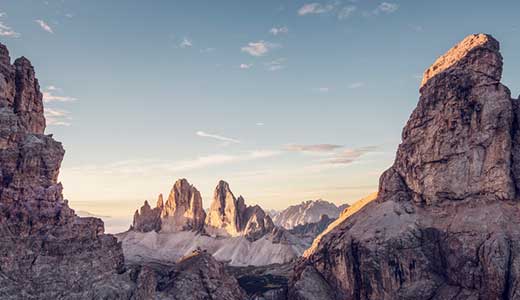
Behind the name lie three mighty mountain obelisks that rise from the Sesto Dolomites like the battlements of a castle wall. The smallest of the three, the Cima Piccola (Kleine Zinne), measures 2,857 meters; the Cima Ovest (Westliche Zinne) stands at 2,973 meters; and the Cima Grande (Große Zinne), at 2,999 meters, only just misses the title of a "three-thousander."
Together, the Three Peaks are considered the landmark of the Dolomites and are affectionately referred to by us locals as the "triumvirate of the Dolomite sky." They are a very popular destination and can be reached via exciting hiking trails, challenging via ferratas and climbing routes, or quite comfortably by car and bus.
Rosengarten (Catinaccio)
The Rosengarten mountain range is famous for a very special natural spectacle: the alpenglow, also known as "Enrosadira." Every evening, the setting sun bathes the pale mountains of the Rosengarten group in a vibrant red light, creating the impression that the Dolomite peaks are glowing.
This magical moment is explained by the legend of King Laurin the Dwarf. The mountain peaks are said to have once been Laurin’s garden, where thousands of roses bloomed. One day, the dwarf king used a cloak of invisibility to hide during a battle, jumping back and forth in his rose garden to trick his opponents. However, they recognized where Laurin was by the trampled roses and defeated him.
The dwarf king became so angry that he cursed his rose garden: no human should ever be able to see it, neither by day nor by night. However, he forgot the twilight, which from that moment on has caused the rose garden to bloom every evening.
The Rosengarten region is worth a visit in every season and impresses with its magnificent panorama and numerous hiking and forest trails.
The Marmolada
Standing at 3,343 meters, the Marmolada is the highest mountain in the Dolomites. Its northern side is home to the only large glacier in the Dolomites, where summer skiing was possible until the year 2000.
Those who summit the "Queen of the Dolomites" are rewarded with a spectacular view over the vast "Dolomite Sea," provided the weather is clear. But don't worry—even if you aren't a passionate mountaineer, you can still reach the peak via cable car and marvel at the fascinating mountain world of the Dolomites during the ascent.
In addition to being home to the highest museum in Europe—the Museum of the Great War at an altitude of 2,950 meters—the Marmolada also houses the rock sanctuary of Madonna della Neve, which was visited and consecrated by Pope John Paul II. This small chapel, nestled in a rock grotto, is just a few minutes' walk from the Punta Rocca mountain station.
The Marmolada also holds another record: the longest ski run in the Alps. On this challenging 12-kilometer-long descent to the valley, skiers can cover a total of 1,900 meters in altitude.
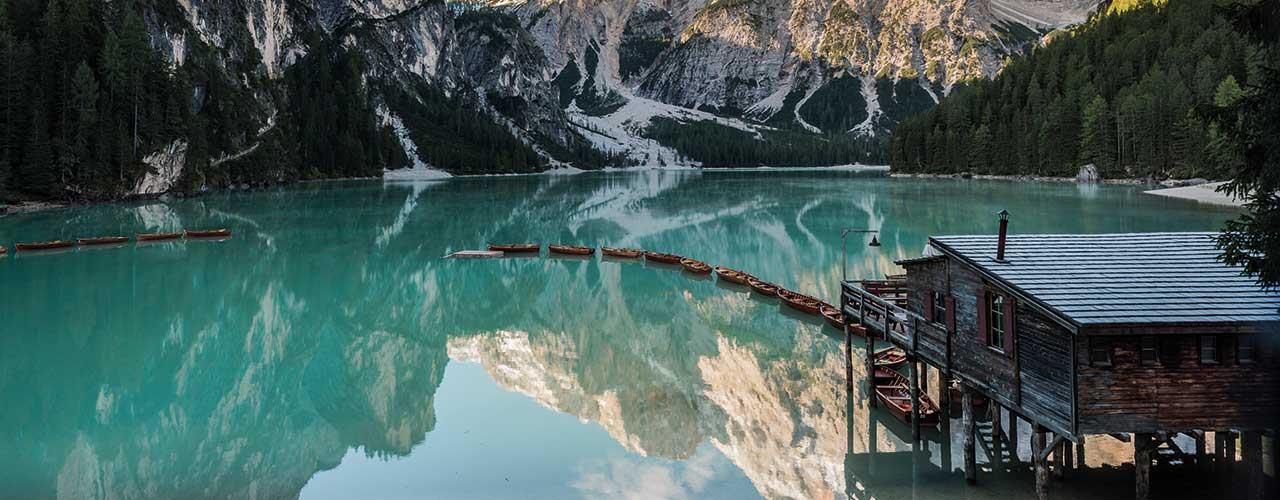
Which lake in the Dolomites is the most beautiful?
Next to the imposing rock faces, the mountain lakes with their emerald-green or deep-blue waters feel like enchanted places. As a result, many of these lakes are surrounded by mysterious legends full of magic. For example, Lake Braies is said to have once been the gateway to the underground kingdom of the Fanes people.
Even though the crystal-clear water of most Dolomite lakes is too cold for swimming, the shores still invite you to stroll, relax, and marvel at the scenery.
Every mountain lake in the Dolomites captivates travelers of all ages with its natural charm. Accordingly, making a selection was difficult, but these three are our personal favorites: Lake Braies, Lake Dobbiaco, and Lake Carezza.
Which mountain lake enchants you the most?
Lake Braies (Pragser Wildsee)
Lake Braies is said to be the most beautiful place in the Dolomites and is often referred to as the "Pearl of the Dolomite Lakes." It is located in the heart of the Fanes-Sennes-Prags Nature Park, nestled in a stunning rock basin at an altitude of 1,496 meters, and is guarded by the majestic Seekofel mountain.
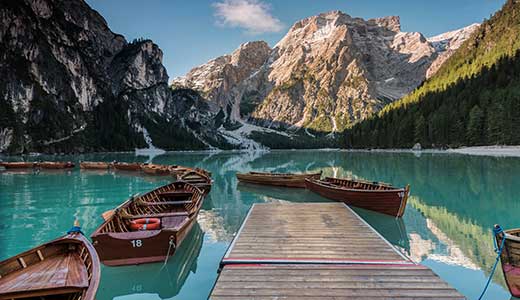
On a gentle stroll along the lakeshore, you can walk around the mountain lake in about an hour and a half. While spruces, larches, and pines provide shade on one side and a small chapel stands open for a moment of quiet reflection, the other side of the shore is terraced, revealing an unobstructed view of the 31-hectare lake surface, where the massive mountain range is mirrored in the green-blue water.
The water quality of Lake Braies is excellent, but since it only reaches a maximum surface temperature of 14°C, only hardened swimmers use it for their laps. A much warmer and more pleasant option is a trip across the lake in the nostalgic wooden rowing boats, which are available for rent from June to October.
Lake Carezza (Karersee)
Lake Carezza is a small, emerald-colored mountain lake in the western Dolomites that owes its vibrant hue to the dense Carezza Forest (Karerforst) lining its shores. To the south of the lake, the massive Latemar massif towers into the sky, while to the northeast, the imposing Rosengarten range stands on the horizon.
Lake Carezza is known by the picturesque nicknames "Rainbow Lake" or "Fairytale Lake." This is because at twilight, the reddish alpenglow of the Rosengarten group blends with the green of the forest on the water's surface, making the lake shimmer in an extraordinary variety of colors.
This remarkable natural spectacle is the source of many stories and legends. The most famous is the tale of the water nymph and the sorcerer: long ago, an old sorcerer reportedly fell in love with the beautiful nymph of the lake, but she rejected his love. He decided to kidnap her and, to distract her, conjured a rainbow across the sky from the Rosengarten to the Latemar. However, his plan failed, and in a fit of rage, the sorcerer smashed the rainbow and threw the shards into Lake Carezza.
On a 20-minute circular trail, you can stroll along the lakeshore and enjoy the magical scenery. Lake Carezza can be reached both by car and by public transport.
Lake Dobbiaco (Toblacher See)
Lake Dobbiaco is located on the border between the two nature parks, Three Peaks and Fanes-Sennes-Prags, making it very close to the Glinzhof. It is a wonderful destination for a leisurely bike ride, as the Drau Cycle Path takes you directly from San Candido to Dobbiaco.
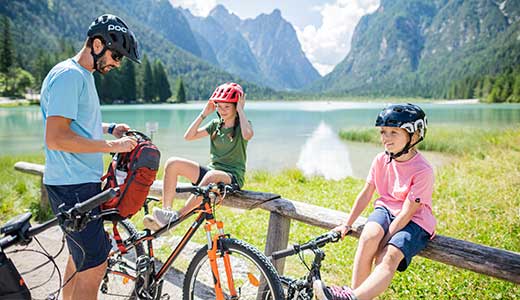
This Dolomite lake was formed by several rockslides that broke loose from the mountains on what is now the lake's western shore. The boulders obstructed the outflow of the Rienz river, causing the water to dam up into a rugged mountain lake.
In the 1980s, regular restoration work was carried out to systematize the lake. As a result, today's Lake Dobbiaco has a continuous water surface that impressively mirrors the dreamlike mountain backdrop of the Birkenkofel and Neunerkofel against a crystal-blue background.
The area around Lake Dobbiaco is a precious wetland biotope and one of the last of its kind in South Tyrol. The diverse shoreline vegetation is home to many different and rare waterfowl, as it provides the animals with an intact and peaceful habitat.
A nature trail leads you around Lake Dobbiaco, with eleven stations providing fascinating information about the history and nature of the lake.
Which alpine pasture is the most beautiful in the Dolomites?
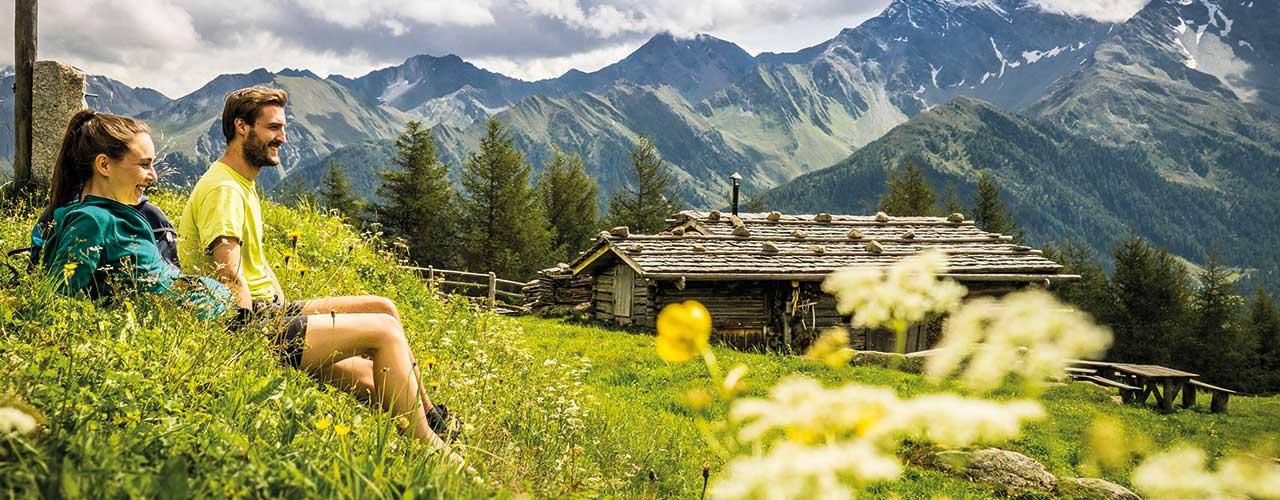
Between the rugged, steep rock faces of the Dolomites, soft, grass-green plateaus stretch out time and again, offering weary hikers a place to relax and providing breathtaking views of the mountains. In South Tyrol, there are nearly 200 alpine pastures with mountain huts providing refreshments, situated at altitudes ranging from 300 to 2,000 meters.
Alpine pastures have their own unique charm in every season. While spring bathes the high plateaus in a sea of flowers, a lush green dominates the landscape in summer, accompanied by the gentle chiming of cow and sheep bells across the meadows. In autumn, people gather on the pastures for extensive "Törggelen" (the tradition of enjoying young wine and roasted chestnuts), and in winter, everyone huddles together cozily in the mountain huts after a great day of skiing.
The most famous alpine pasture in the Dolomites is the Seiser Alm. However, we find Prato Piazza (Plätzwiese) to be the most beautiful, and if you are interested in history, the Rodenecker and Lüsner Alm is an excellent choice for an excursion.
Which alpine pasture is your favorite?
Seiser Alm (Alpe di Siusi)
With an area of 5,600 hectares, the Seiser Alm is the largest high-altitude alpine pasture in Europe. Located within the Schlern-Rosengarten Nature Park, it fascinates visitors with its untouched nature set against the backdrop of the nearby Dolomite peaks: Langkofel, Plattkofel, and Schlern.
Around 790 different plant species grow on the sun-drenched Seiser Alm. To protect this diverse flora, private vehicles are banned throughout the entire area. As a result, the air is exceptionally clean, and a pleasant sense of tranquility prevails.
In summer, the pasture can be explored via gentle, child-friendly hiking trails, while in winter, optimal conditions ensure great fun in the snow. In addition to skiing, snowboarding, and tobogganing, the Seiser Alm is particularly popular for winter hiking, snowshoeing, and cross-country skiing.
For culinary delights, there are over 25 family-run mountain huts on the Seiser Alm, some of which also offer overnight accommodations.
Prato Piazza (Plätzwiese)
Prato Piazza is a true gem of nature and is considered one of the most beautiful hiking areas in South Tyrol. It is located in Braies (Prags) on a high plateau at an altitude of 2,000 meters, surrounded by the Fanes Group with the Croda Rossa (Hohe Gaisl), the Cristallo Group, and the Picco di Vallandro (Dürrenstein).
Despite the crowds of visitors who enjoy the beauty of this wonderful panoramic terrace every day, Prato Piazza has managed to preserve its original character. Cars are prohibited at the top during the summer, and there is a strict traffic regulation for the access road starting from Ponticello (Brückele) in Braies. A maximum of 100 vehicles are allowed to drive up the toll road between 4:00 PM and 10:00 AM; otherwise, a shuttle bus brings hikers and nature lovers to the high plateau.
In summer, Prato Piazza is a popular starting point for attractive high-mountain tours, and in winter, snow enthusiasts make extensive use of the pasture for cross-country skiing and snowshoeing. However, our secret favorite is spring at Prato Piazza, when thousands of crocuses bloom on the alpine pasture, coloring it in shades of white and violet.
The Rodenecker and Lüsner Alm
This alpine pasture lies at an altitude of 1,500 to nearly 2,200 meters between the municipalities of Rodengo (Rodeneck) and Luson (Lüsen) and covers an area of 2,300 hectares.
The area is historically significant, as traces of hunting camps from the Stone Age have been found here. The management of the pasture also reflects traditional practices. While most alpine pastures in the Dolomites are managed as collective interest groups, the Rodenecker and Lüsner Alm is small-scale and owned by many individual farmers who bring their livestock to graze in the summer and mow the meadows for winter hay.
Furthermore, several natural monuments can be found here, such as Lake Tschuppwald, home to alpine newts, or the Laiermoos biotope, a protected high moor. Due to the many wetlands on this high plateau, rare plant and animal species can be discovered here.
The Rodenecker and Lüsner Alm primarily attracts leisure hikers, as the trails on the high plateau are level and offer overwhelming views of the Zillertal Alps, the Grossglockner, the Odle Group (Geislergruppe), the Brenta Group, and the Oetztal and Stubai Alps.
Another highlight in this alpine area is the chapel at Painer Kreuz. Its foundation stone was consecrated by Cardinal Joseph Ratzinger, who later, as Pope Benedict XVI in 2008, blessed it once more from a helicopter.
Which valley in the Dolomites is the most beautiful?
Three large, significant rivers wind through the natural landscape of South Tyrol, dividing the land into five major valleys: in the east, the Rienz flows through the Puster Valley; in the north, the Eisack runs through the Eisack Valley; and in the west, the Adige separates the Adige Valley from the South Tyrolean Lowlands and the Vinschgau.
These five valley systems consist of numerous enchanting side valleys, which in turn give their names to popular holiday regions in the Dolomites. Aside from our home—the High Puster Valley—our personal favorites are the Funes Valley and the Ega Valley.
Which valley in the Dolomites do you like best?
The High Puster Valley
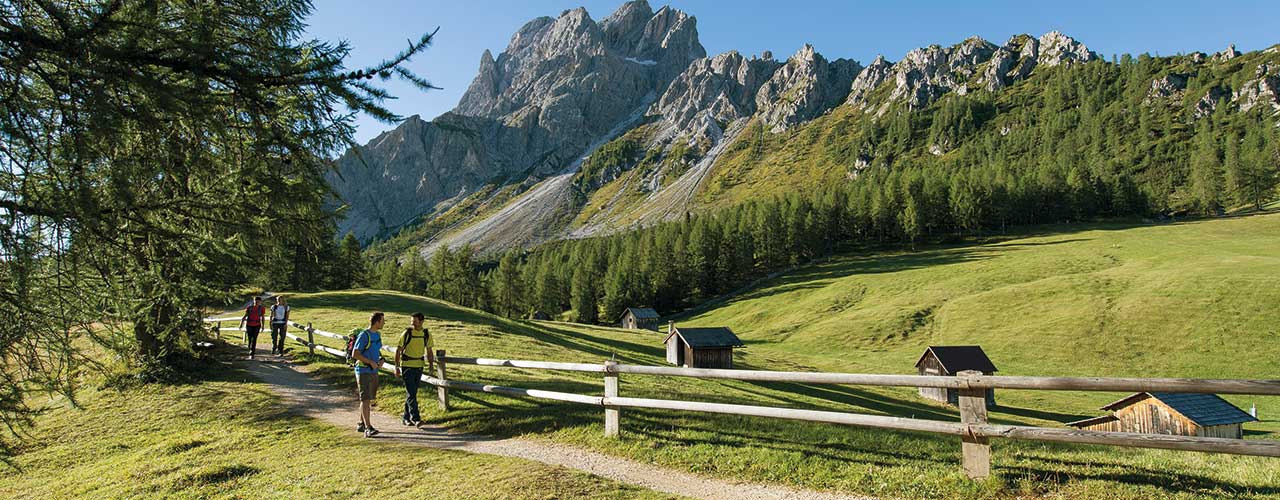
The Glinzhof is located in the beautiful High Puster Valley (Alta Pusteria), the eastern part of the Puster Valley. It stretches between the municipalities of San Candido, Villabassa, Braies, Sesto, and Dobbiaco. This impressive holiday region is also known as the "3 Zinnen Dolomites" region.
Many of the natural highlights of the High Puster Valley are among the most beautiful places in the Dolomites, such as the Three Peaks, Lake Braies, Lake Dobbiaco, and Prato Piazza.
In both summer and winter, nature lovers and mountain sports enthusiasts will find everything they could wish for here, as the High Puster Valley offers countless hiking opportunities, well-maintained cycling routes, challenging trails, and dreamy ski areas.
Throughout the year, the High Puster Valley hosts various cultural, culinary, and sporting events that delight tourists and locals alike, such as the Gourmet Festival, the Villabassa Potato Festival, the Dolomiti Superbike, the Dobbiaco-Cortina cross-country ski race, South Tyrol's oldest Krampus run in Dobbiaco, and the traditional New Year's Eve concert with the Haydn Orchestra.
The Funes Valley (Villnößtal)
The Funes Valley is a 24-kilometer-long side valley of the middle Eisack Valley. It is bordered to the east by the Sas de Putia (Peitlerkofel) group and to the south by the Odle (Geisler) group. It is considered an "Eldorado" for mountain enthusiasts and is the birthplace of perhaps the most famous mountaineer in the world: Reinhold Messner.
The valley is home to six villages—St. Magdalena, Teis, St. Jakob, St. Valentin, Coll, and St. Peter—where South Tyrolean customs and traditions are still deeply cherished.
What makes this Dolomite valley truly unique is the visible geological structure made possible by the valley's specific orientation: older quartz phyllite formations overlay rock layers that are actually younger in origin.
Finally, the impressive mountain giants of the Funes Valley are highly sought-after destinations for hiking, mountain bike tours, and extensive skiing fun.
The Ega Valley (Eggental)
The Ega Valley is another small, sun-drenched side valley of the Eisack Valley. It covers an area of 25,000 hectares and is located in the southwestern Dolomites, north of Bolzano. The valley owes its name to Ladin settlers from the 15th century; the Ladin word "ega" means "water."
The Ega Valley is home to six villages—Nova Ponente (Deutschnofen), Collepietra (Steinegg), Carezza (Karersee), Obereggen, Monte San Pietro (Petersberg), and Ega (Eggen)—which invite you to enjoy an authentic mountain vacation and serve as starting points for countless recreational activities. From here, you can explore the Dolomites in summer on a total of 800 kilometers of hiking trails and mountain bike tracks, or enjoy the winter on 86 kilometers of ski slopes, 100 kilometers of cross-country trails, seven toboggan runs, and two snow parks.
Special attractions in the Ega Valley include the picturesque Lake Carezza, the legendary Rosengarten mountain range, and the earth pyramids of Steinegg—impressive stone pillars standing 30 meters high.
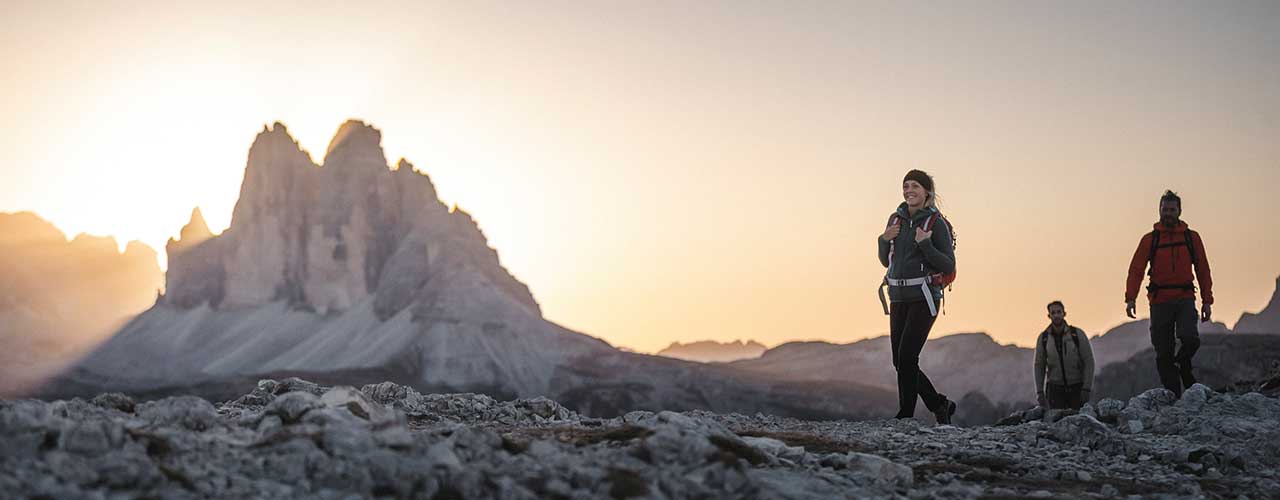
It is beautiful everywhere in the Dolomites!
We could continue this list of the most beautiful places in the Dolomites indefinitely: the most beautiful via ferratas, the most beautiful high-altitude trails, the most beautiful cycle paths, the most beautiful trails, the most beautiful slopes, the most beautiful museums, the most beautiful churches, and so on.
But don't forget: beauty is in the eye of the beholder. Though quite honestly, no matter where you spend your vacation in the Dolomites, you will be absolutely overwhelmed by the beauty of nature.
Just ask us quickly and easily via our contact form and we will contact you as soon as possible!