
Vacation with Dogs
in South Tyrol
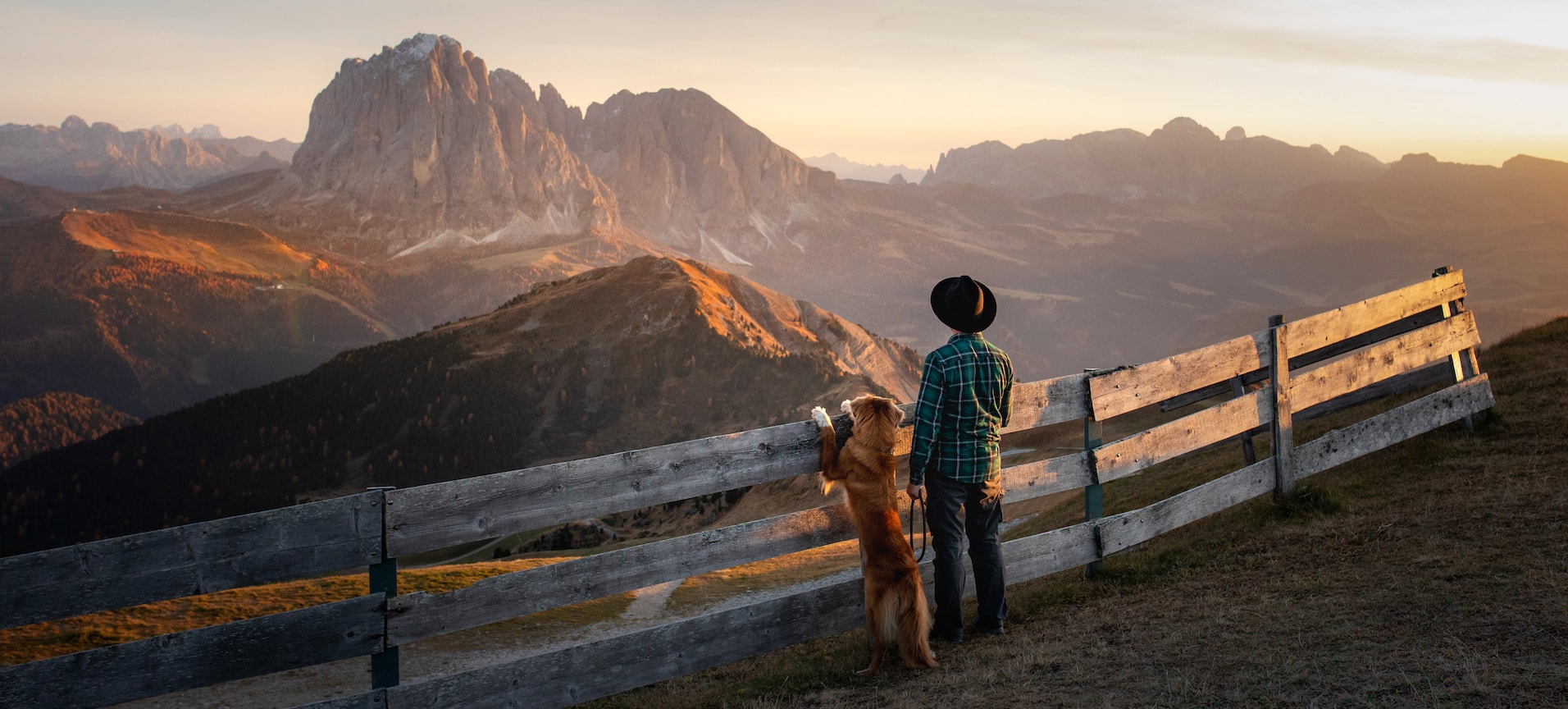
A vacation with your dog is not a compromise – on the contrary: taking your four-legged friend along allows you to experience South Tyrol in a particularly intimate way. Roaming across alpine meadows together, breathing in the fresh mountain air, resting on the shores of a crystal-clear lake – these are moments that bond humans and dogs and make a vacation truly unique.
Many start with the same question: "Vacation in South Tyrol: Can I take my dog with me?" The answer is clear: yes. South Tyrol is one of the most dog-friendly regions in the Alps. Whether it's a cozy pug, a lively terrier, or an athletic border collie – every dog finds its place and its pace here.
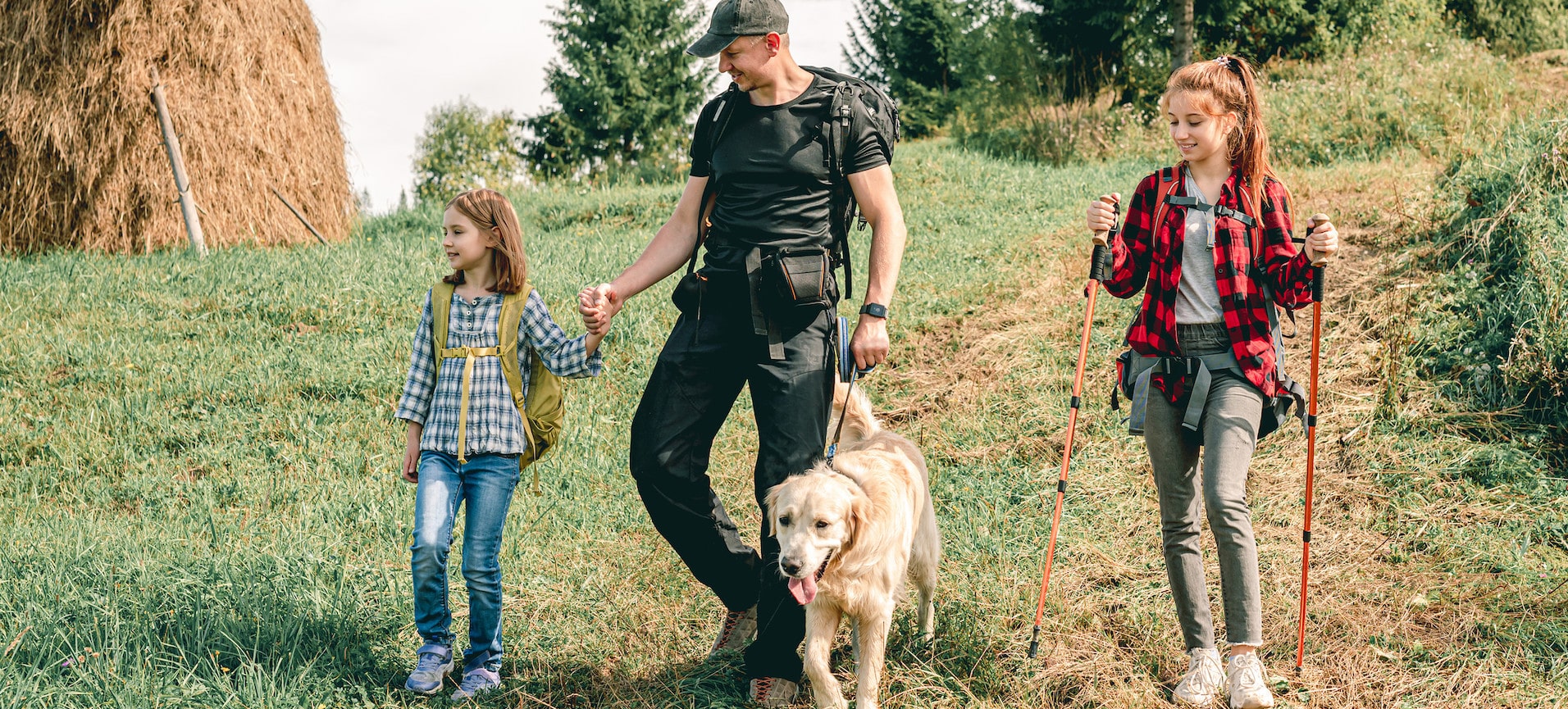
The Pustertal Valley, often referred to as the “Gateway to the Dolomites,” is the perfect starting point for adventures big and small. Gentle walking paths, scenic alpine trails, and impressive summit routes are all close together here. Families, couples, and seniors alike will find suitable tours – and your four-legged companion makes every single one of them a special experience.
In this article, we guide you through South Tyrol’s dog-friendly landscapes. We provide information on entry requirements, introduce hiking and swimming spots for dogs, summarize the most important rules at a glance, and show you what to look for regarding accommodation and travel. Additionally, we’ve included a practical packing list – so you and your furry friend are perfectly prepared for your vacation in South Tyrol.
Table of Contents
- Why South Tyrol is ideal for a vacation with dogs
- Entering South Tyrol with a dog – what you should know
- The Pustertal Valley – Gateway to the Dolomites
- Hiking with a dog in the Dolomites – the right preparation
- Hiking in the Dolomites with a dog – safety and consideration
- Lakes, rivers, and swimming spots for dogs in South Tyrol
- General rules for dogs in South Tyrol
- Vacation with dogs here at Glinzhof
Why South Tyrol is ideal
for a vacation with your dog
Natural diversity to suit every dog
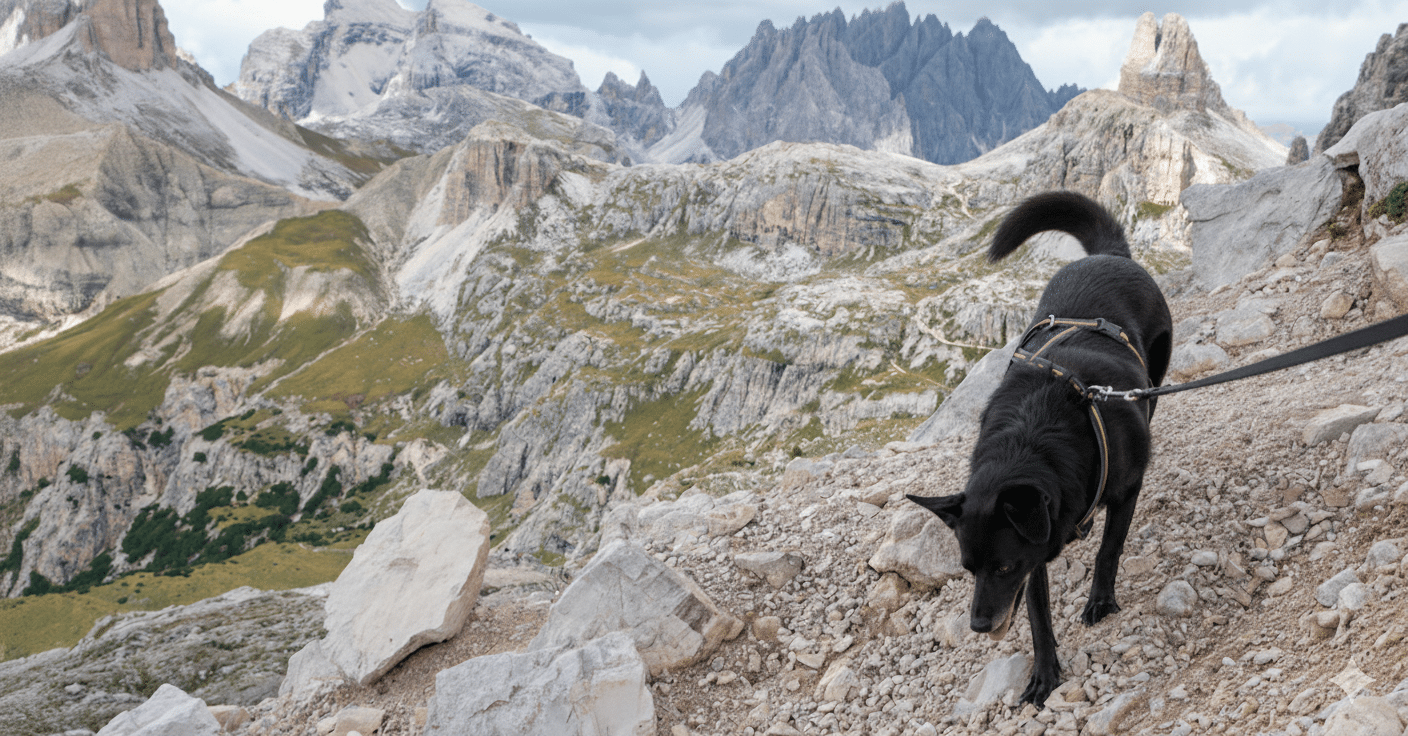
South Tyrol is a region that feels as if it were created specifically for joint adventures between humans and dogs. Hardly any other destination in the Alps offers such variety: vast alpine meadows, crystal-clear mountain lakes, shady forests, and the incomparable backdrop of the Dolomites. For dogs, this means an endless amount of sniffing, exploring, and experiencing. For their owners, it means trails and destinations that meet every requirement.
Whether it’s a leisurely stroll in the valley or an ascent to a sunny mountain hut – in South Tyrol, you will find the right fit for every breed and temperament. A pug or a bulldog who prefers to take things a bit slower will feel just as at home on the soft meadow paths as an athletic border collie racing toward the next summit with a sparkle in its eyes.
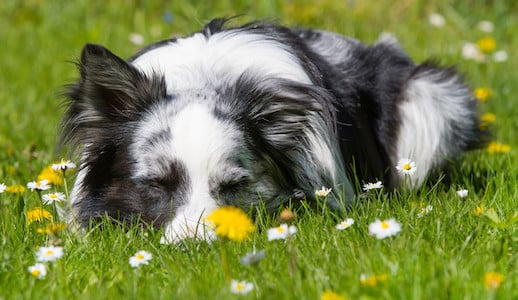
There are also numerous possibilities for older dogs or furry friends with limited stamina: flat walking paths along rivers, circular trails around lakes, or short hikes assisted by cable cars.
The combination of a pleasant climate, fresh mountain air, and diverse landscapes makes South Tyrol a space for recreation that is equally good for both dog and human. Just a few steps out into nature are enough to breathe deeply – and that is exactly what makes a vacation with your dog here so special.
A balance of hospitality and consideration
Beyond the nature, it is primarily the attitude of the people that makes South Tyrol so dog-friendly. Many hosts have animals themselves or grew up with dogs, and they understand how important it is for your four-legged friend to feel welcome. At numerous alpine pastures, water bowls are readily available, and many inns offer dog blankets or quiet corners so that your pet can truly relax.
At the same time, consideration is a central theme in South Tyrol. To ensure that everyone – whether with or without a dog – can enjoy their vacation, both hosts and guests prioritize respectful coexistence. Leash requirements in towns or national parks are not just a regulation here, but a shared responsibility. This ensures that wildlife remains protected, children feel safe, and people without dogs can move about freely and without worry.
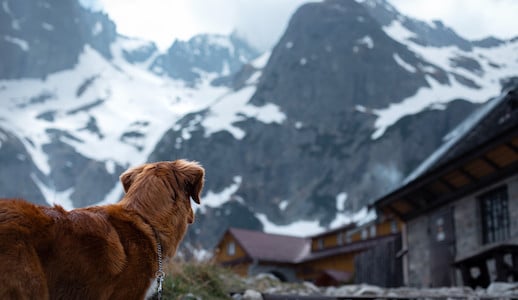
This blend of warmth and clear rules ensures that dog owners are welcomed with open arms in South Tyrol. Here, a vacation with your dog means freedom and adventure – embedded in a culture that truly values community.
Entering South Tyrol with a dog – what you should know
A successful vacation with your dog in South Tyrol begins with good preparation. The most important requirements are the EU Pet Passport with a valid rabies vaccination and a registered microchip – entry is not possible without these documents. To ensure nothing is forgotten along the way, we have put together a compact checklist for your dog-friendly vacation.
EU Pet Passport, chip, and vaccinations
When traveling to South Tyrol with a dog, you are moving within the EU. To ensure entry goes smoothly, dog owners need the blue EU Pet Passport. This document contains all the essential information: the owner's name and address, the dog's identification number, and vaccination records. Most importantly, a valid rabies vaccination is required. This must have been administered at least 21 days before the start of the trip and must not be expired.
In addition, the dog must be clearly identified, either by a microchip or – in the case of older animals tattooed before 2011 – by a clearly legible tattoo. Strictly speaking, without this identification, entry at the border will be refused.

The EU Pet Passport is issued by your local veterinarian. If you don’t have one yet, you should make an appointment in good time. The passport is valid for the animal's lifetime, though vaccinations must be kept up to date with regular boosters. For travelers from Germany, the Federal Ministry of Food and Agriculture (BMEL) provides a good overview of current regulations, including those for travel to other EU countries.
In addition to mandatory vaccinations, it is wise to consider protection against ticks and Mediterranean diseases. Depending on the season and region, South Tyrol is home to parasites that can be unpleasant for dogs. By traveling well-prepared, you can enjoy your vacation without a care in the world.
Further regulations and practical tips
In addition to vaccinations, there are a few rules that dog owners should keep in mind. Generally, a maximum of five dogs per person can be brought into Italy – any more is considered a commercial transport. Puppies under 15 weeks of age that have not yet been vaccinated against rabies are not allowed to enter.
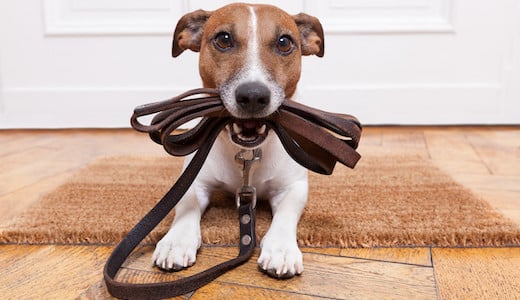
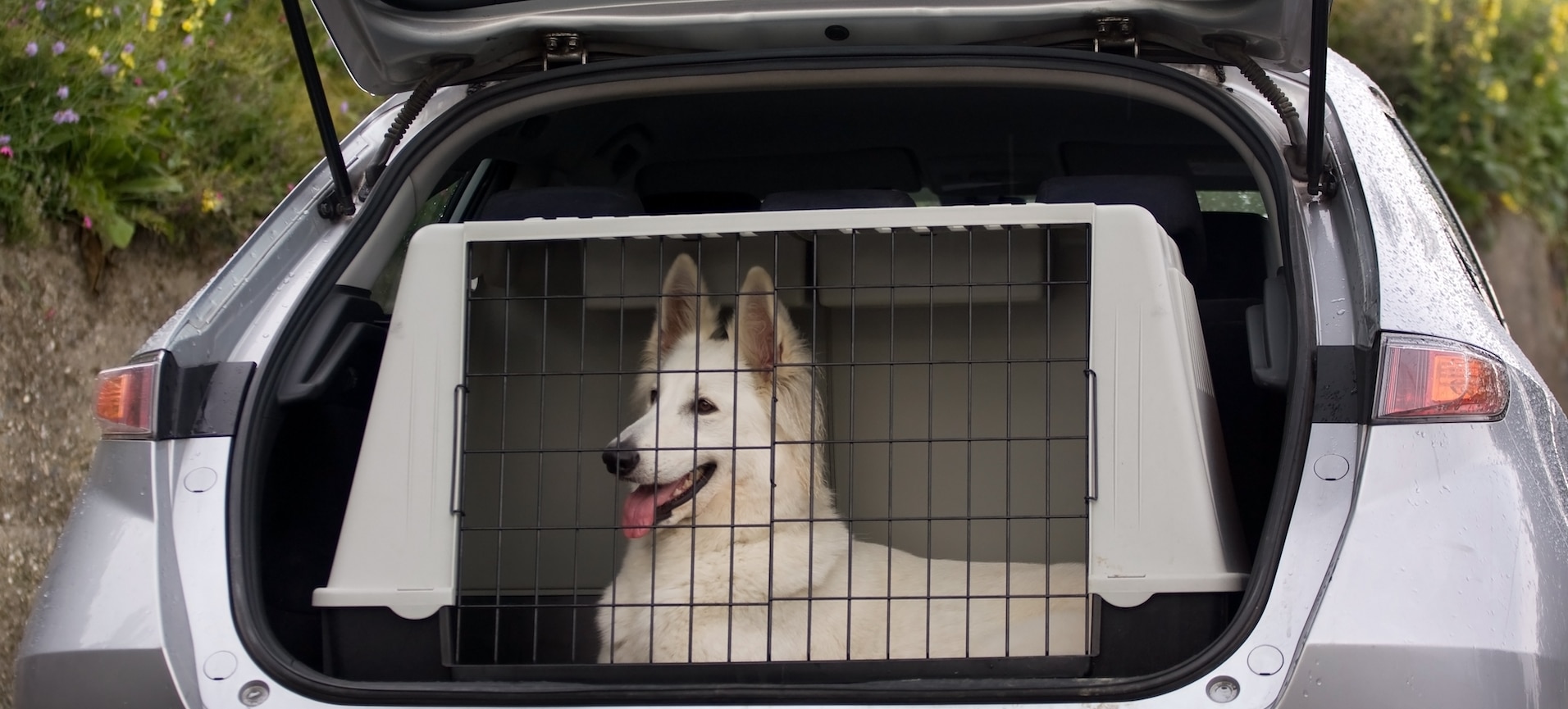
For the journey and your stay: In Italy, it is mandatory to carry a leash and a muzzle with you at all times. Both should be in your luggage – even if they are not always needed in everyday life, spot checks can occur. On public transport or cable cars, muzzles are often compulsory. If you are arriving by car, remember the safety requirements: dogs must be transported in a way that ensures they do not pose a danger to the driver or passengers.
Transport crates, dog seatbelts, or safety grilles are practical solutions for car travel. For longer journeys, regular breaks at rest areas are helpful – ideally with water and short walks.
Liability insurance for your dog is also highly recommended. Some accommodations actively ask for proof of insurance, and it ensures you are protected in case of any accidental damage. For emergencies, it is worth looking up the address of the nearest veterinarian at your holiday destination – many accommodations are happy to provide recommendations here.
All current information regarding entry into Italy with a dog can also be found on the BMEL website. Once you have taken these few points into account, the most important formalities are already taken care of – and you can focus entirely on the wonderful aspects of a vacation with your dog in South Tyrol.
The Pustertal Valley – Gateway to the Dolomites
When people think of a vacation in South Tyrol, the Dolomites are usually the first thing that comes to mind. But just before them lies the Pustertal Valley – a valley full of tranquility and possibilities.
Between charming towns, meadows, and gentle slopes, you’ll find a landscape perfectly suited for relaxation with your dog. At the same time, it serves as the perfect starting point for excursions into the world of the Dolomites.
A valley with special opportunities
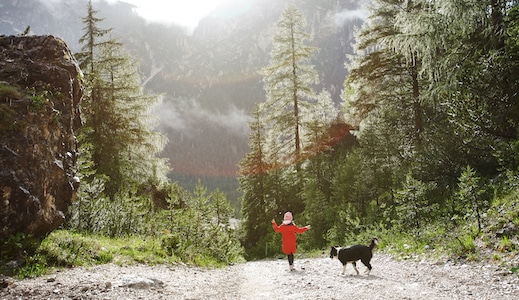
The Pustertal Valley stretches like a green ribbon from Brixen to Lienz, connecting the mountains of South Tyrol with East Tyrol. For dog owners, it is a stroke of luck: gentle valley paths, rustic villages, and proximity to the Dolomites make it a region full of variety. When vacationing here, you don't need long drives – walks along the Rienz River or through expansive meadows begin right at your doorstep.
The flat cycling and walking paths that run through the valley are particularly practical for families and seniors. Here, children can run, scoot, or cycle while the dog walks relaxedly alongside. For older guests, numerous benches and rest areas make short breaks very pleasant.
At the same time, the valley offers plenty of adventure for couples or active travelers: ranging from short climbs to sunny viewpoints to full-day tours into the adjacent Dolomites.
The Pustertal Valley is therefore an ideal starting point for anyone looking for flexibility in their vacation. Those interested in culture will find lively towns like Bruneck or Innichen. Those seeking nature have lakes, forests, and mountains right outside their door. And the best part: in this diverse environment, dogs are not just allowed—they are a natural part of the scenery.
Starting point for the Dolomites
It is not without reason that the Pustertal Valley is often called the “Gateway to the Dolomites.” From here, several access points open up into world-famous mountain landscapes: the Sesto Dolomites with the Three Peaks (Drei Zinnen), the Prags Valley with the famous Lake Prags (Pragser Wildsee), or the high plateaus of Plätzwiese and Kronplatz. For dog owners, this means pure variety.
Some tours start directly in the valley, while others can be easily reached by cable car – perfect when traveling with children or older dogs. Every hike rewards you with unique impressions: sometimes it’s blooming alpine meadows, sometimes quiet mountain forests, and other times the vastness of a high plateau.
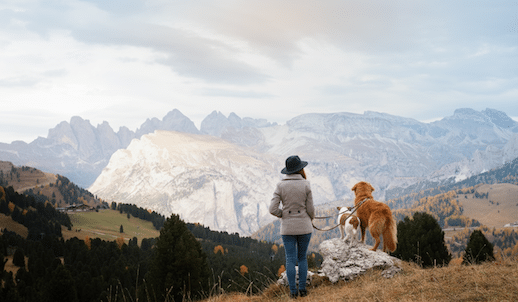
Dogs experience this variety just as intensely as we do: sniffing, watching, and listening.
The Pustertal Valley is far more than just a transit route – it is a key to South Tyrol’s heart, the Dolomites. Those who spend their vacation here with a dog have the freedom to decide anew each day: stay comfortably in the valley or head high up into the mountains. It is precisely this flexibility that makes the valley so special – and so rewarding for both dog and human.
Hiking with a dog in the Dolomites – the right preparation
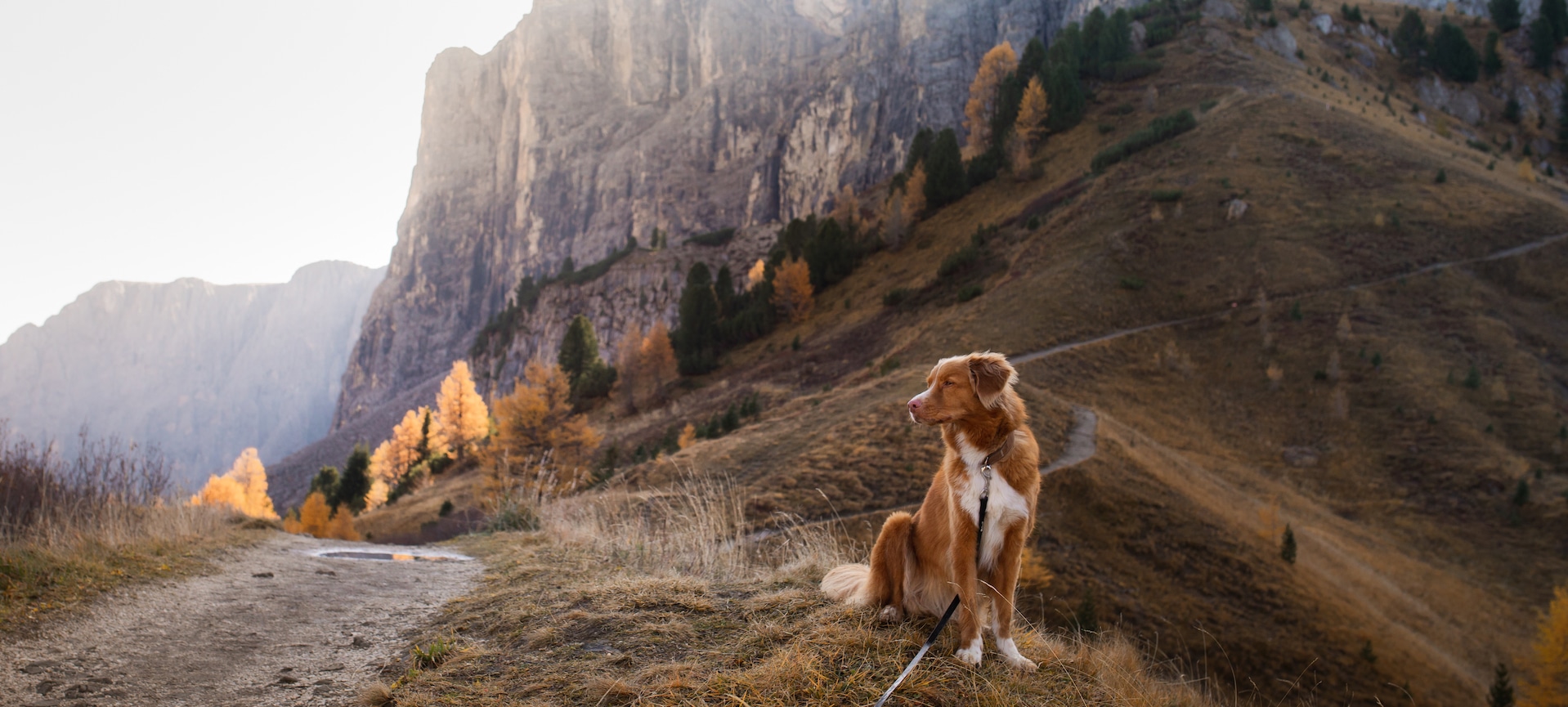
The Dolomites are a natural wonder that inspires hikers from all over the world. With a dog, every tour becomes more intense: new scents, fresh air, meadows, and streams bring the landscape to life.
To ensure that both humans and dogs enjoy themselves equally, it is important to choose suitable routes—with the right pace and paw-friendly paths.
Choosing the right tour – consider your dog’s pace and stamina
Not every hike is suitable for every dog. Older animals or small breeds feel most comfortable on gentle valley paths or short alpine circuits where the inclines are manageable and there are plenty of places to rest. Young, athletic dogs, on the other hand, can master longer high-altitude trails—provided the terrain is not too demanding and the temperatures are pleasant.
It is important that the human isn't the only one setting the pace. Dogs quickly show when they are reaching their limits: they lag behind, seek out shade, or sit down. Taking these signals seriously prevents overexertion. A tour that is too long or too steep can not only take the joy out of the experience but also lead to health problems. Therefore: shorter, more varied routes with more breaks are better—ensuring the hike remains a pleasure for everyone.
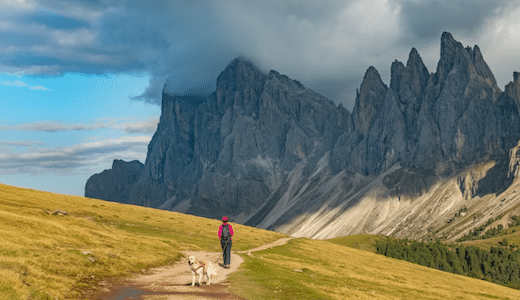
Another tip is making use of cable cars. Many regions in the Dolomites offer the opportunity to cover part of the ascent comfortably. This allows families or those with older dogs to reach impressive high-altitude trails without the experience becoming too strenuous.
From a leisurely stroll in the Fischlein Valley to the panoramic trail on the Plätzwiese plateau—the Dolomites have the right tour for every pace and fitness level. The key is to view your dog as an equal hiking partner.
Paw-friendly hiking – paths, surfaces, and breaks
The Dolomites offer an enormous variety of trails: shady forest paths and soft meadow tracks, but also sharp-edged scree or hot gravel roads. These stony passages in particular can become a challenge for sensitive dog paws.
On hot summer days, rocks and gravel can heat up significantly—this can cause pain or even injury to the paw pads. Taking short breaks in the shade, sticking to grass where possible, and checking the ground temperature with your hand will help prevent overstressing your dog.
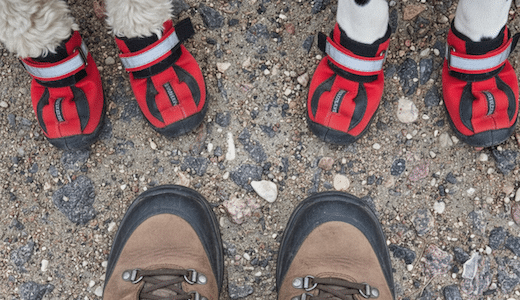
For dogs with sensitive paws, dog boots can provide protection on scree or very rough terrain. It is important to get your dog used to them in advance so that they accept them without issue during the tour.
A well-fitting harness is also highly recommended instead of a collar—it distributes pressure more evenly, is more comfortable for the dog, and provides greater safety if they need to be secured or held back.
This ensures the hike remains relaxed, even on more challenging trails. By keeping your dog's paws and proper equipment in mind, you ensure that your four-legged friend moves just as safely and calmly as their human counterpart.
Hiking in the Dolomites with a dog – safety and consideration
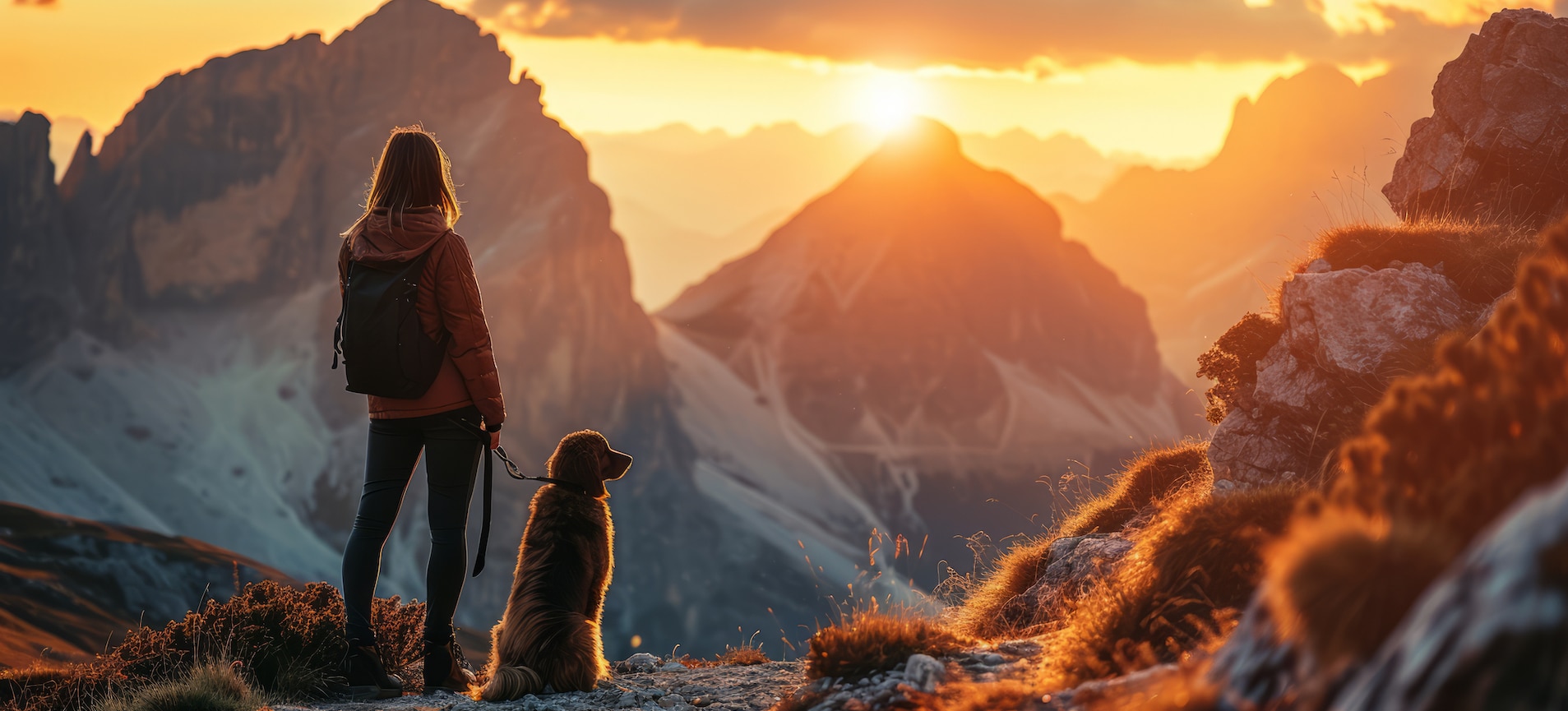
The mountain world of the Dolomites is breathtaking, but also demanding. Weather conditions, altitude, and encounters with wildlife or livestock place special requirements on both dog and owner.
To ensure the hike remains safe, you should not only look forward to the adventure but also prepare for potential challenges. Two topics are of particular importance: safety through the right equipment and consideration for nature and fellow hikers.
Leash requirements in Nature Parks and municipalities
In South Tyrol, leash requirements apply wherever large numbers of people, wildlife, or grazing areas intersect.
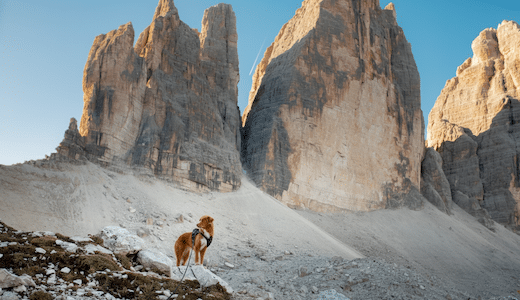
These rules are particularly strictly enforced in Nature Parks and National Parks, such as the Drei Zinnen Nature Park, the Fanes-Sennes-Prags Nature Park, or the Seiser Alm. In these areas, dogs must be kept on a leash at all times—whether on wide hiking trails or in more remote areas.
Dog regulations also mandate short leashes in towns and municipalities. This serves the interest of safety, as encounters with cars, bicycles, or children at play are inevitable. On promenades, in market squares, or in busy pedestrian zones, police may conduct spot checks and issue warnings if a leash is not used.
Public transport and cable cars are a special case: here, both a leash and a muzzle are mandatory. Even if many dogs are reluctant to wear one, a muzzle is a required piece of equipment for journeys by bus, train, or gondola.
Being prepared saves you from unnecessary discussions or fines. Pro tip: gradually get your dog used to the muzzle at home so that they accept it without stress during your vacation.
Refreshment and safety – water, weather, and equipment
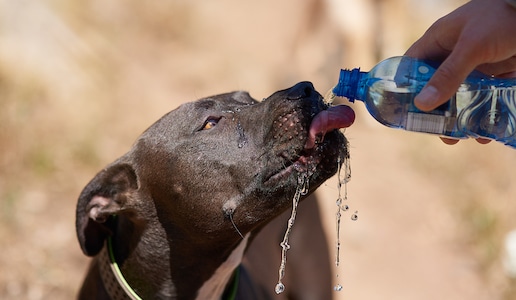
Nothing works in the mountains without water. Even though many tours pass by streams, their water levels are often low in the summer. Therefore, a water bottle for your dog is a basic essential. Be cautious about drinking from lakes or meltwater streams: water that is too cold or potentially contaminated can be hard on your dog's system.
Weather plays a major role in the Dolomites. Within a very short time, bright sunshine can turn into a thunderstorm. Dogs often react sensitively to thunder or sudden temperature changes.
For this reason, it is better to set out early, adapt your tour to the weather forecast, and carry a light coat or a blanket for your dog for cooler evenings.
The basic equipment includes:
- a sturdy leash (ideally 3–5 meters),
- a muzzle for buses and cable cars,
- a well-fitting harness or dog boots for difficult terrain,
- a first-aid kit including tick tweezers,
- insect repellent,
- waste bags to keep the trails clean,
- sufficient food or snacks for longer tours.
With this preparation, you are perfectly equipped for most situations.
Lakes, rivers, and swimming spots for dogs in South Tyrol
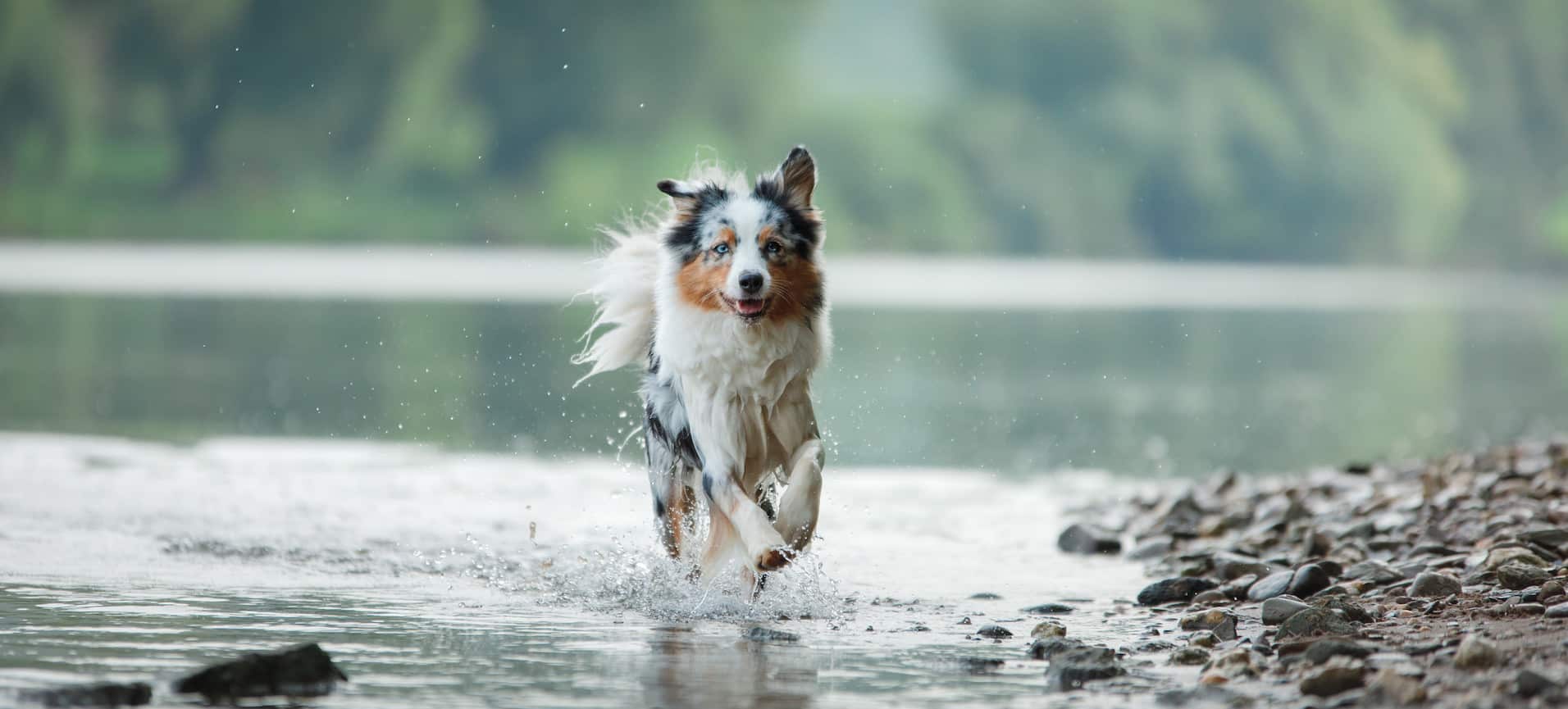
Hardly anything makes a dog happier than jumping into the water after a hike. In South Tyrol, there are plenty of opportunities: crystal-clear mountain lakes, calm riverbanks, and small streams that provide a welcome cooldown in the summer.
Letting your dog swim offers them joy and refreshment—however, it is important to choose suitable spots and pay attention to local signage.
Abkühlung an den bekannten Bergseen
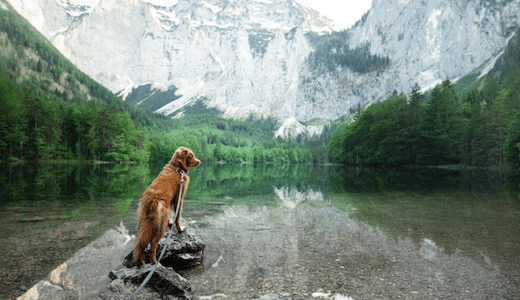
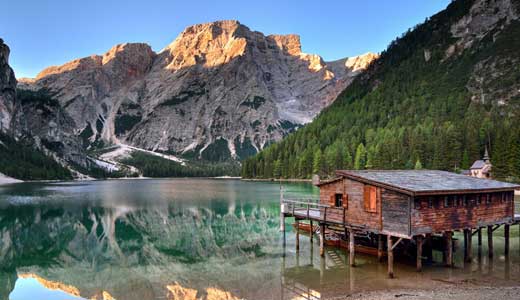
Many of South Tyrol’s famous lakes are true postcard motifs – and tempting for both humans and their four-legged friends. At Lake Prags (Pragser Wildsee), the imposing rock massif is reflected in the turquoise-green water. Officially, dogs are allowed here, but swimming in the lake is restricted by local signage.
Along the shore, there are specific spots where paws are allowed in the water – ideally in the early morning or evening when it is less crowded.
Lake Toblach (Toblacher See) is more easily accessible and offers shallow shoreline areas. There, dogs can cautiously enter the water while families enjoy the circuit around the lake.
Officially, there may be seasonal restrictions here as well, so a quick glance at the information signs is always worthwhile.
An idyllic tip is Lake Antholz (Antholzer See). Nestled between forests and mountains, it offers many shaded sections for relaxed walks. The same rule applies here: dogs are welcome, but swimming spots are limited—please be considerate of nature and other visitors.
Small rivers and streams – refreshing alternatives
In addition to the large lakes, South Tyrol is home to countless small rivers, streams, and side arms that are excellent for dogs. Along the Rienz River in the Pustertal Valley, there are many sections where your four-legged friends can safely enter the water. These spots are often quieter and less crowded – perfect for a quick refreshment in between activities.
Small mountain streams in the side valleys also invite you to take a break. Dogs love running through the shallow water or chasing sticks. The advantage: the water is usually clear and shallow, allowing owners to clearly see the ground beneath the surface.
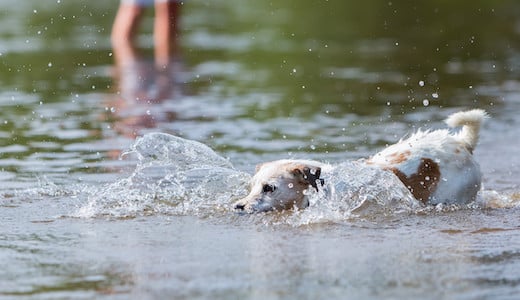
It remains important to keep an eye on currents and weather conditions, especially after rainfall or during the snowmelt season.
Utilizing these natural water spots offers your dog pure swimming pleasure—away from the restrictions of the major tourist magnets. In this way, safety, environmental compatibility, and the joy of shared adventure come together perfectly.
What are the general rules for dogs in South Tyrol?
To ensure that humans, dogs, and nature coexist harmoniously, there are clear rules in place.
The most important one: leash requirements apply in all Nature and National Parks. This ensures safety, protects wildlife, and allows for relaxed hikes for everyone.
Leash requirements in nature, towns, and public transport
Throughout South Tyrol, leash requirements apply wherever encounters with other people, animals, or vehicles are likely. These rules are particularly strict in Nature and National Parks such as Drei Zinnen, Fanes-Sennes-Prags, or on the Seiser Alm—here, dogs must generally be kept on a leash, regardless of whether you are on wide trails or remote paths.
The regulation also applies in towns, pedestrian zones, and along promenades: dogs must be leashed.
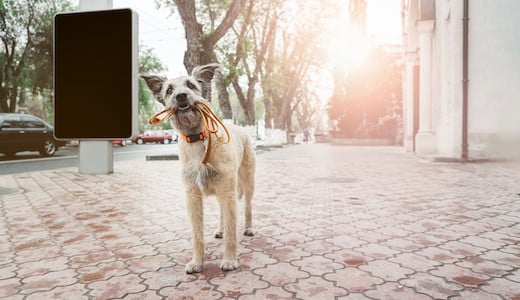
In public spaces, local or municipal police may conduct spot checks. Public transport and cable cars are a special case: here, both a leash and a muzzle are mandatory.
Being prepared saves you from unnecessary discussions or fines. It is helpful to gradually get your dog used to the muzzle at home so that they wear it without stress during your vacation.
Protecting wildlife, livestock, and swimming restrictions
Not every lake or stream in South Tyrol is automatically a swimming spot for dogs. At some bathing lakes, there are clear swimming bans indicated by signs—for example, at popular natural gems like Lake Prags (Pragser Wildsee). While there are individual spots along the shore where paws are allowed in the water, swimming is strictly prohibited.
However, those traveling with a dog will find numerous alternatives in the surrounding area: small mountain streams, rivers like the Rienz, or lesser-known lakes where dogs are permitted.
On the alpine pastures (Almen), encounters with cows, sheep, or horses are common. Dogs should always stay close to their owners in these areas to avoid stress or dangerous situations. When in doubt, taking a small detour is better than walking directly through the herd.
Environmental protection is equally important: dog waste must be collected in bags and properly disposed of—even on remote trails. By following these simple rules, you help ensure that South Tyrol remains a dog-friendly travel destination in the future.

Vacation with your dog here at Glinzhof
Dog-friendly rooms
At Glinzhof, dogs are simply part of the family—our farm dog, Schnuffi, proves it every day. That’s why we’ve designed several rooms specifically for guests with dogs. They are spacious, furnished with easy-to-clean materials, and offer everything needed to make a vacation with your four-legged friend comfortable. Travelers with dogs can rest assured that there is plenty of space and the right environment for their needs.
Guests without dogs will find the peace and relaxation they seek just as easily. Through a conscious separation between dog-friendly and classic rooms, we create a balanced atmosphere where everyone can enjoy their time off.
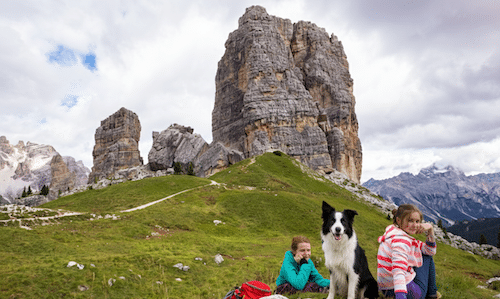
The result is an informal, family-like atmosphere where consideration, appreciation, and genuine well-being take center stage—for humans and animals alike.
Surcharges for your vacation with a dog in South Tyrol
For the accommodation of dogs, we charge a small daily fee per dog. This contribution covers the additional costs for cleaning, maintenance, and the specific amenities in our dog-friendly rooms. This ensures that every guest—whether traveling with or without a four-legged friend—finds a freshly prepared, clean, and cozy room upon arrival.
We deliberately keep the surcharge moderate, as a vacation with your dog at Glinzhof should be uncomplicated and enjoyable. At the same time, this allows us to maintain a high level of quality and comfort. Dog owners can rest assured that their pets are welcome and in good hands.
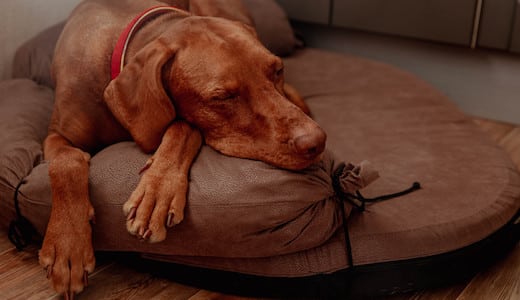
We look forward to welcoming you—for vacation moments that both human and dog will cherish for a long time to come.
Just ask us quickly and easily via our contact form and we will contact you as soon as possible!